
- Home
- Pages
- Tour List
- Destinations
- Date & Pricing
- Tour System
- Blog
Located in the southeastern region of Peru, Manu National Park is one of the most biodiverse and protected areas on the planet. This UNESCO World Heritage Site is a must-visit destination for nature lovers, wildlife enthusiasts, and adventure seekers.
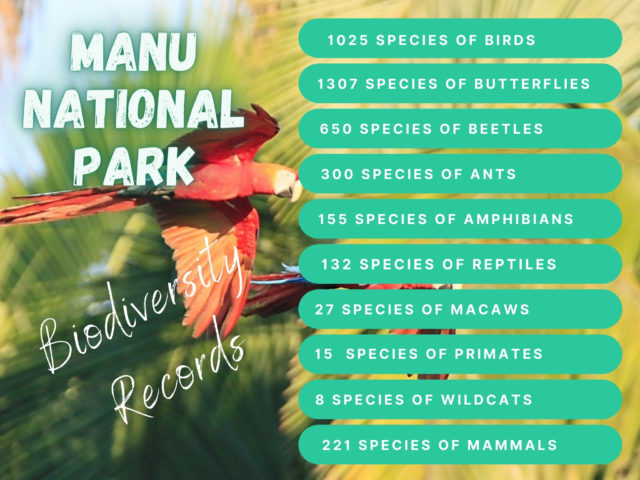
Manu National Park is situated in the Amazon rainforest, covering an area of over 1.7 million hectares. The park is home to an incredible array of flora and fauna, including over 1,000 species of birds, 1,200 species of butterflies, and 200 species of mammals.
Manu National Park is a wildlife enthusiast’s paradise. The park is home to iconic species such as the jaguar, puma, and spectacled bear. Visitors can also spot a variety of bird species, including macaws, parrots, and toucans.
Manu National Park is also home to several indigenous communities, including the Matsiguenka and the Amarakaeri. These communities have lived in harmony with the forest for centuries, and visitors can learn about their traditional way of life and culture.
Manu National Park is a protected area, and tourism is carefully managed to ensure the conservation of the park’s natural resources. Visitors can explore the park with licensed guides and tour operators, who provide a safe and responsible tourism experience.
Visitors to Manu National Park can enjoy a range of activities, including:
– Wildlife spotting and birdwatching
– Hiking and trekking through the forest
– Visiting indigenous communities and learning about their culture
– Staying in eco-lodges and experiencing the park’s natural beauty
Manu National Park is located in a remote area of Peru, and visitors typically fly into Lima and then take a domestic flight to Puerto Maldonado. From there, visitors can take a boat or bus to the park’s entrance.
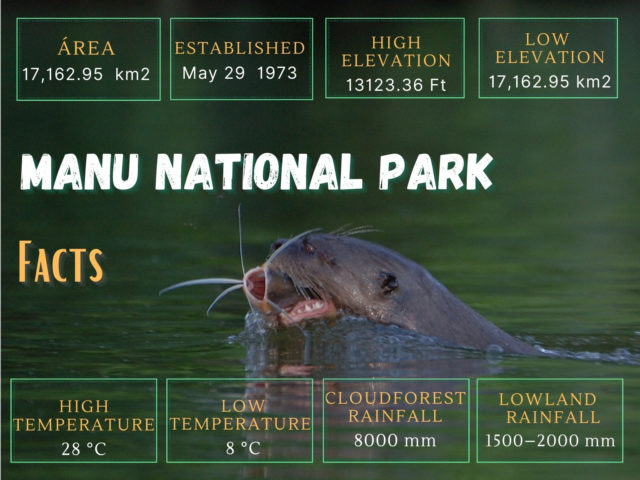
Nowadays have been some modifications within the protected area legally established in the core area (Manu National Park – SERNANP), which has motivated the effort to work on an update both in the zoning of the Reserve and to propose a possible expansion of it, with the interest of involving and benefiting a greater number of populations, as well as to expand its sphere of influence, with the aim of integrating new populations and consolidating a sustainable development model, according to the UNESCO’s guidelines for conservation, research, and development. Here the tourism plays an important role, in fact, the private tourist enterprises represent a key of development for the natural and cultural value and strategic for the purpose of Reserve.
These 2 zones belong and are integrated into the Manu Biosphere Reserve which is the proper name to the entire Biosphere Reserve beside the Cultural Zone or buffers Zone it’s the zone that is adjacent and surrounding the Manu National Park or Reserved Zone, one objective of the buffer zone of the parks is to reduces the pressure from humans activities, in fact, the territory at the Buffer Zone it’s also known as the Cultural Zone where most of the short guided tours are lead in our programs of 3 days so the longer trips usually go to the Manu Reserved Zone of the Manu Park that demands at least 6 days to travel as a minimum.
Here some differences between the Reserved zone in contrast to the Cultural Zone of Manu. Never-the-less, it would be worth adding a few days to your program while you’re here. To explore the wilderness and all Manu has to offer, let’s get a closer view so the blue patch is the Cultural zone while the orange patch is the reserved zone, (map created on google my maps its can enlarge to see in details)
The reserved zone is a term used to refer to the location inside the Manu Park, it comprises Limonal Ranger Station at the lower Manu basin. Near to the confluence with the Alto Madre de Dios river towards Pakitza Ranger station. The following activities are exclusive of our reserved zone (up 6 days tour program)
One of the most favorite spots for nature lovers, wildlife enthusiasts, photographers, birders. Even for the guides, to explore this quiet environment by paddled catamarans (motorboats are prohibited). On these boats are great ways to certainly observe; giant river otters, large black caimans, aquatic birds, emperor tamarin, and even pygmy marmoset. It is a great location to catch amazing sunrises and sunsets. However, the visits to the lake are subject to scheduled times (around 2 hours for each group). The tour guides request admittance while registering at the Limonal Ranger Station.
A metal tower aside from the lake, the canopy tower welcomes you the chance to capture and take in the stunning views of this wonderful section of untouched rainforest. This bird’s eye view experience is something that you would never usually encounter while exploring the forest at ground level. Winding through the trail networks, to the dock, and up the tower allow you to see; aquatic birds, caimans, and giant river otters. The lake is not open to navigation.
There are at least 2 major types of primary forest you will be able to explore from Varzea, known as the seasonally flooded forest (in the high water season). Other trails you will navigate take you through Terra Firme Forest, a forest that is the habitat for the Brazil Nut (Bertholletia excelsa). Each forest and trail you pass through holds a unique wildlife collection and forest contrast. The only human intrusion to this forest was during the time of The Amazonian rubber boom. This didn’t last too long, to which most of the forest remains intact.
Nearby Casa Matsiguenka you can visit the Macaw Clay Lick that attracts parakeets, parrots, and large macaws. At any time during the morning parakeets congregate and start to gather to eat the clay. This is an important part of their diet. This activity is only available during the dry season and dependent on a few other factors. The second accessible clay licks are located in the vicinity of the Limonal ranger station. Both attract medium-sized macaws, parrots, and much more parakeets.
The Maizal Clay lick i’s probably the best one to visit, in terms of large macaws that are abundant but currently lack any infrastructure. It’s located in the Intangible Manu Area (further up of Pakitza) But yet prohibited for tourists to explore that far. Besides the mentioned clay lick the Blanquillo it’s fabled as the most visited and is located beyond the Park, in the lower Madre de Dios Basin.

The boat navigation itself along the Manu River is one of the highlights of these excursions. Here is a place like no other. In these spots, the chances of encountering a wildcat are heightened. Catch a glimpse of jaguars, and big mammals (Tapirs, Capybaras). Not to mention the large caimans that can be seen lounging on the river banks. Through animal monitoring, most wildlife is reported in its prime during the dry season.
The weather also plays a key role to perform good wildlife sightings. The recommended times to venture for navigation would be early in the morning or late in the afternoon. This is also the perfect time for exploring the river after heavy rain at any time or when friajes (cold fronts) are gone.
Most of the tour-designed programs that go and stay at Casa Matsiguenka (the core of the park) require a minimum of a week of traveling by ground from Cusco and river transport from Atalaya or Shipeteari Port.
The location of the Casa Matsiguenka plays an important role in achieving a real experience in the wilderness and accomplish in visiting the most natural attractions inside the Park. The Lodge is a luxury area to say you are in the Amazon. Well situated on the left side of the Manu River. Each bungalow has two beds with mosquito netting. Shared bathroom facilities are in a separate building. We generate our electricity with solar panels. There is also a separate building with a kitchen and a small dining room. On top of that, the people who run this lodge are Matsiguenka Natives, which makes it different from the other lodge management in the Southern Amazon Rainforest.
Now, these trees are impressive. Kapok trees are much larger in the whole Manu Basin. There is one along the trail that goes to Otorongo Owbox Lake. However, there are few giant trees in the vicinity of Machuwasy Lake (Cultural Zone)
This express tour takes you into the Real Amazon experience. Divulge yourself with the monkeys, brightly colored birds, and creatures that live here. To be able to witness a part of nature that is on the decline. Travel through the wilderness, to the unseen locations we have to offer.
The orange patch traverse the zone knows as the touristic zone formerly called a reserved zone, that goes along the lower Manu river towards its confluence to the Madre de Dios River nearby the Boca Manu village
The blue patch traverse the zone knows as the cultural zone, that goes along the Manu road and adjacent to the Alto Madre de Dios River basin. Comprising the area from the Acjanacu pass still in the high andean mountains towards the lower Madre de Dios River basin
Click below and download the Manu National Park in Peru Map